Independent & Unbiased
Founded in 2017, Pickleball Portal is one of the original pickleball content sites — built before the sport went mainstream. Our reviews are written by 14 independent contributors who play competitively and test gear firsthand. We may earn a small commission through affiliate links, but this never influences our recommendations. You pay nothing extra.
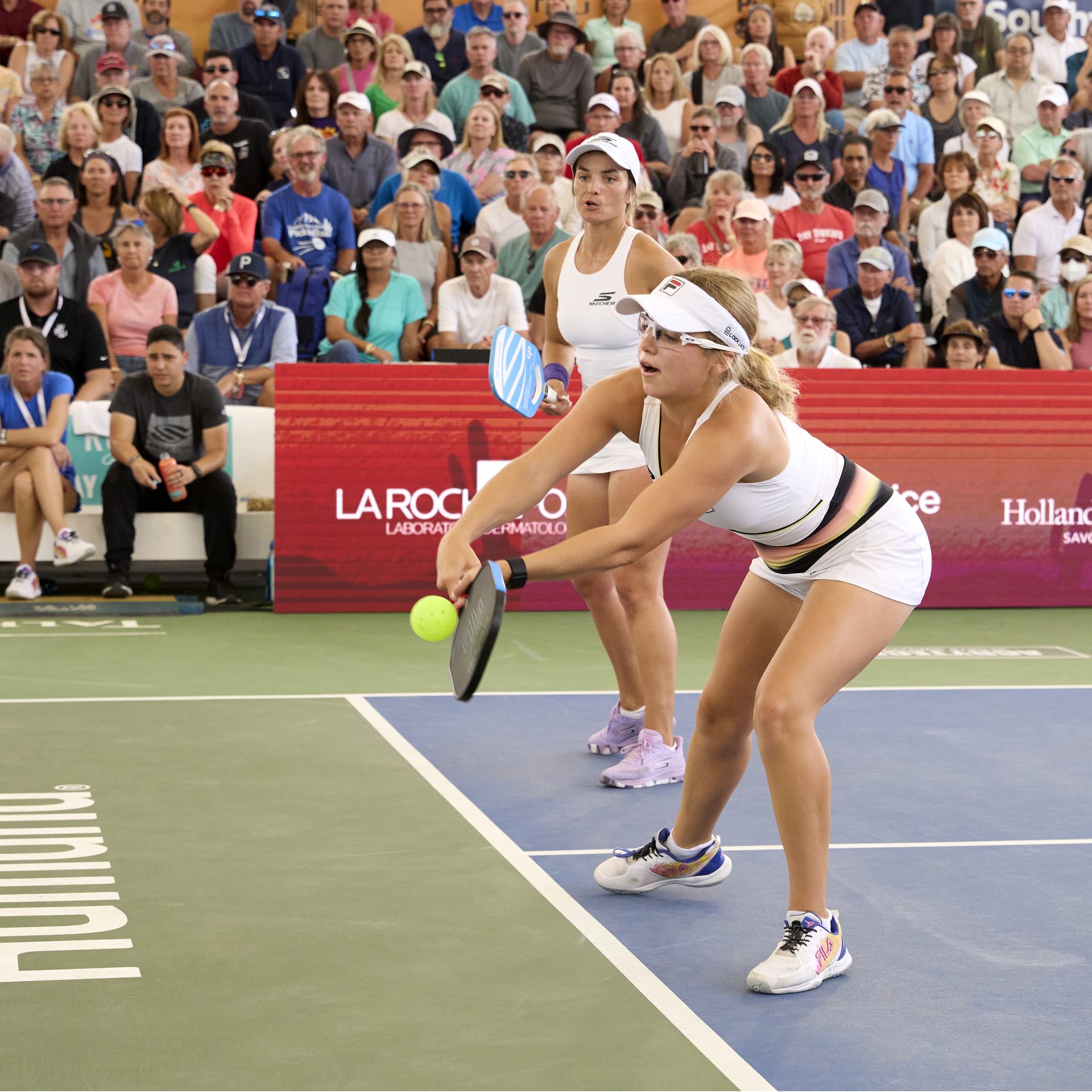
Photo by Kerry Pittenger; IG:@ kerry_pittenger_pickleball
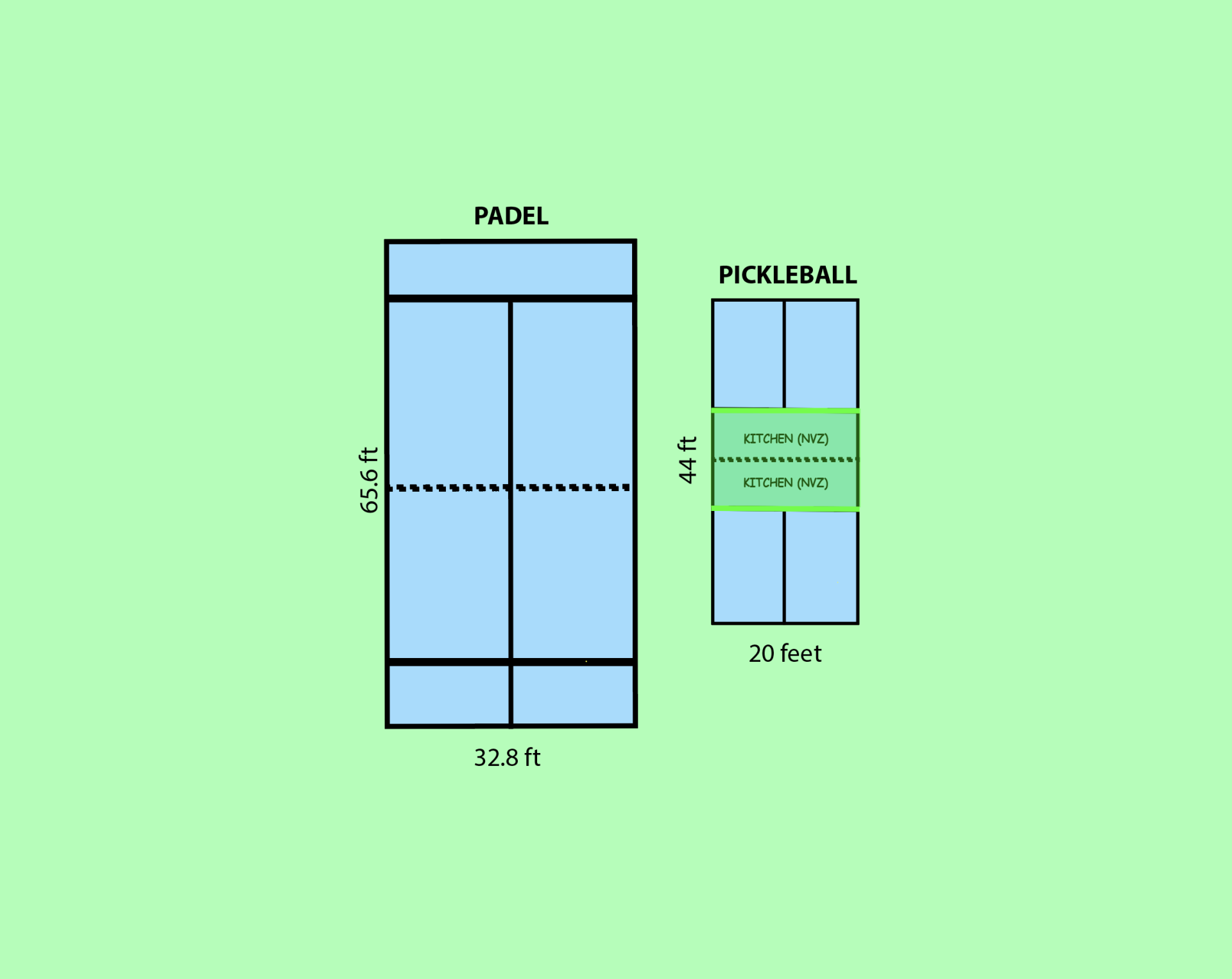
Pickleball combines elements of tennis, table tennis, and badminton. You'll play on a smaller court compared to tennis (just 44 by 20 feet) with zones including the right and left boxes and the 'kitchen' (non-volley zone). The game goes to 11 points, with a two-point lead to win.
Now that you know a bit more about the game, let's look at the three fundamental rules.
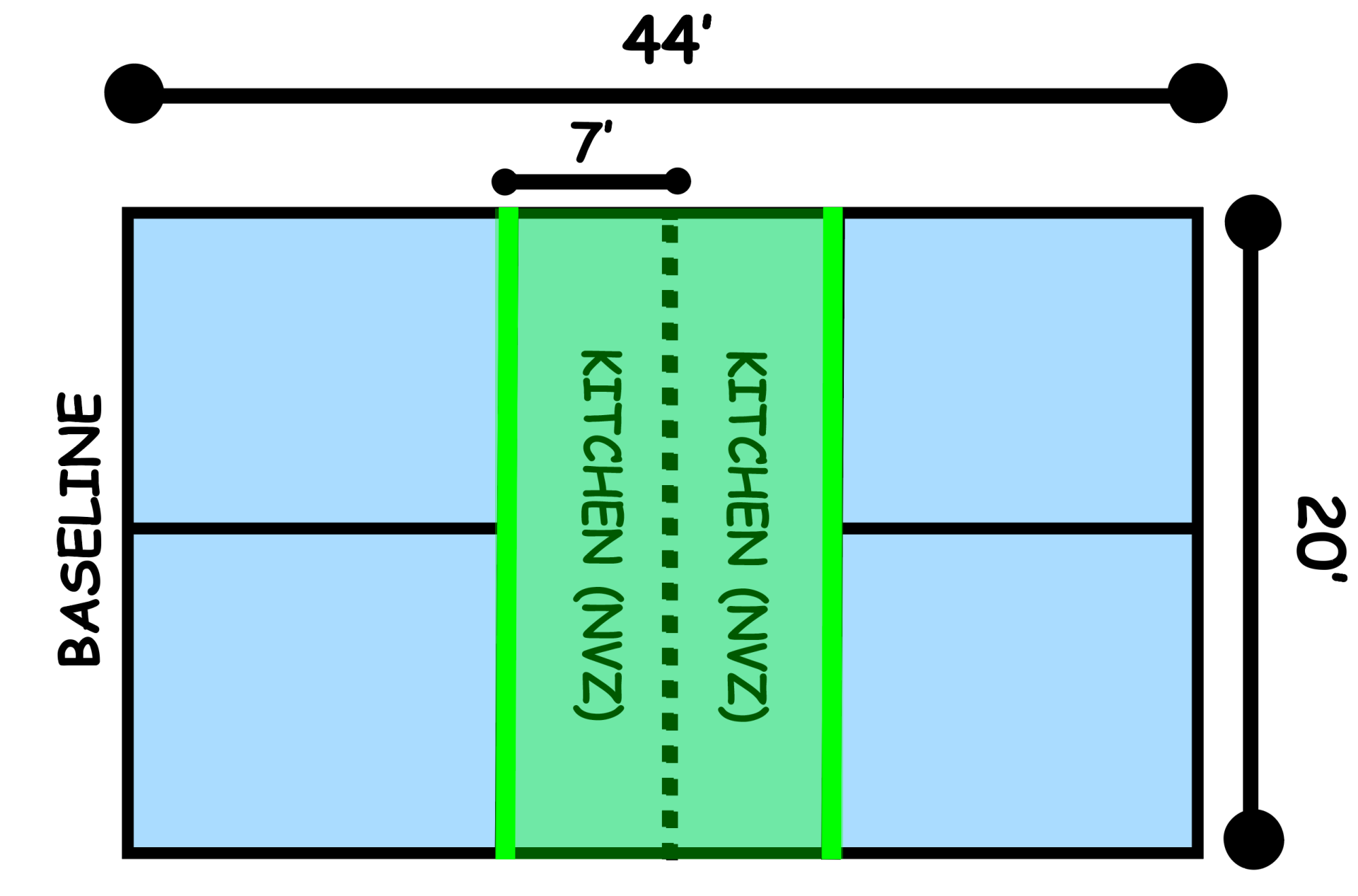
Pickleball Court Dimensions
Rule 1: Serving Rules
When serving, both feet must be behind the baseline. One foot can hover over the line, but one foot must always be on the ground when making contact with the ball. You can't jump in the air while serving; it must be an underhand serve. The paddle must contact the ball below your wrist and waist. There is an option to hit a drop serve, where you can drop the ball but not throw it down to bounce higher. The serve must go diagonally across the net, landing beyond the kitchen line (Figure 1 below). If it lands on the kitchen line, it's a fault, but hitting any other line is okay.
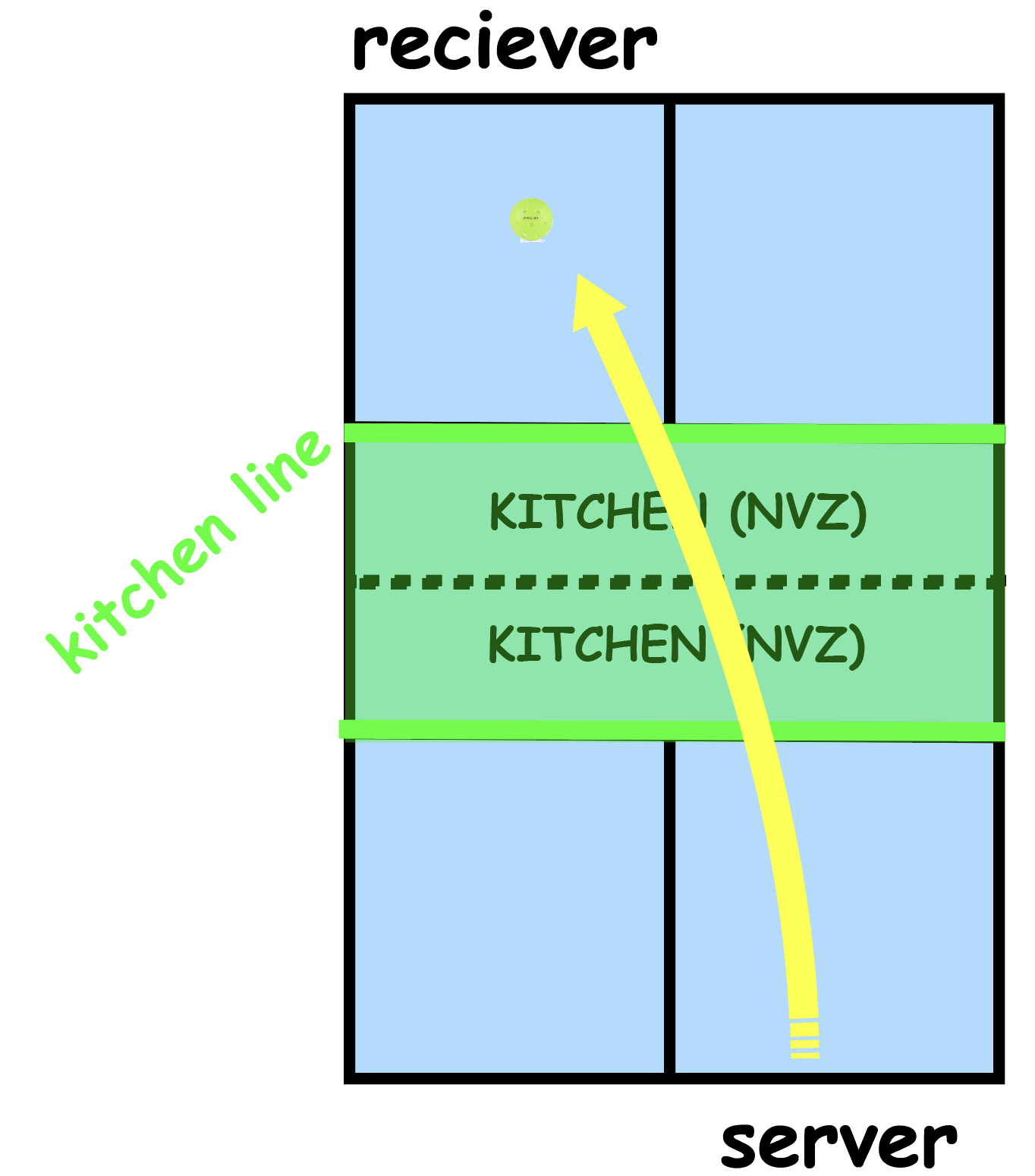
(Figure 1)
Rule 2: The Two-Bounce Rule
Unlike in tennis, where players might serve and then volley immediately (volleys are simply any ball that is hit out of the air before it bounces), in pickleball, both teams must let the ball bounce once on their side before hitting it out of the air or volleying (Figure 2). This rule explains why the serving team sets up with two players at the baseline, while the receiving team has one player back and one up towards the net. After the ball bounces on your side, you can legally hit it out of the air, provided you're behind the kitchen line.
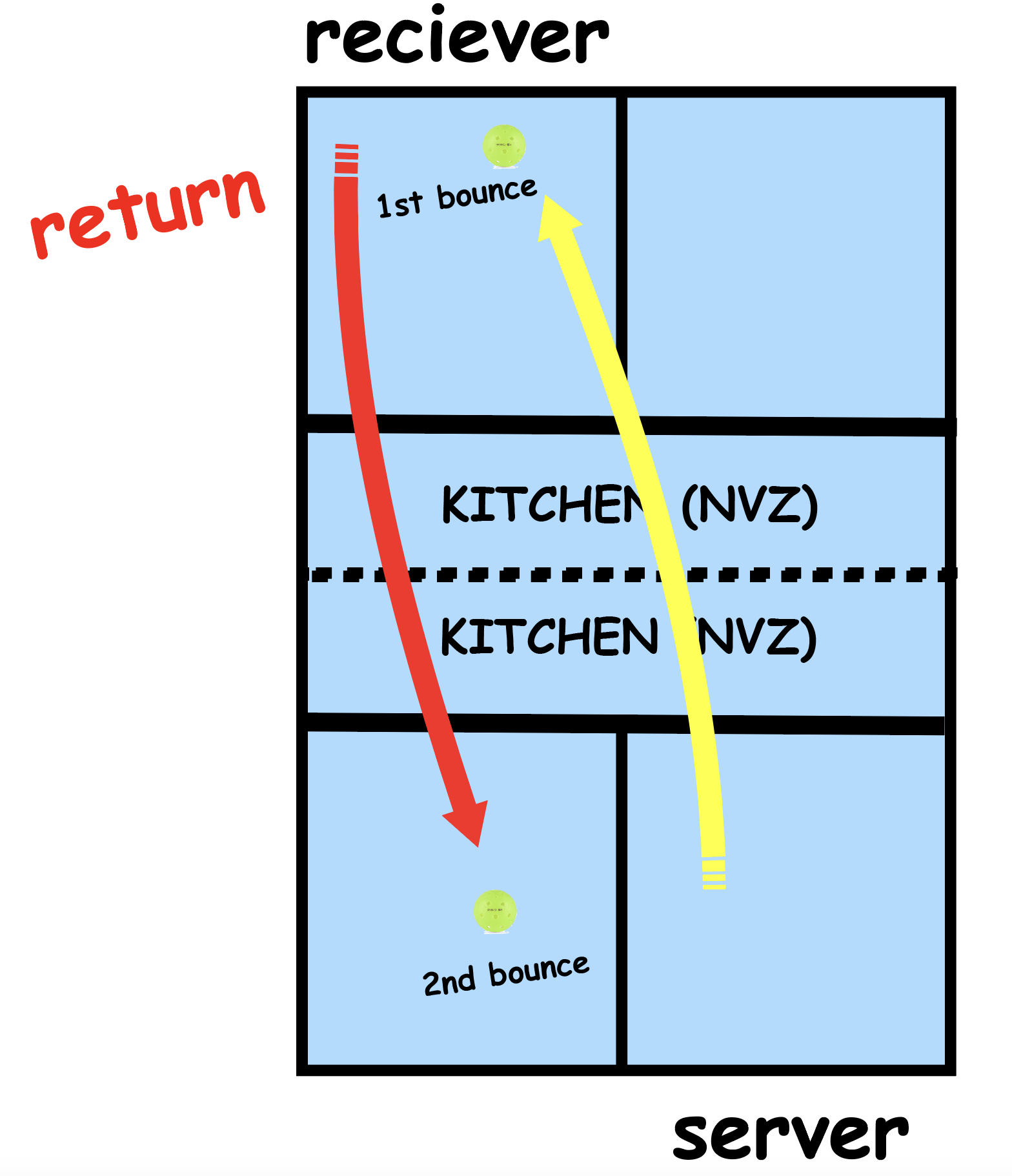
(Figure 2)
Two-Bounce Rule Video Example
How To Choose a Pickleball Paddle: The Complete Buyer's Guide (2026)
Rule 3: Kitchen Rules (Non-Volley Zone)
Listen up because these are the rules that most confuse people when they first start playing. The kitchen is a non-volley zone because players cannot hit the ball out of the air while standing in it. The three main kitchen rules are as follows:
- If you hit the ball out of the air, your feet cannot touch or be inside the kitchen line (Figure 3).
(Figure 3)
- If you hit a ball out of the air and your momentum carries you into the kitchen, even if the point is quote "over," that's a fault. So, what do you do? Stay out or yell help from your partner to pull you out before you fall in; that's okay.
- If the ball bounces in the kitchen, you can step in to return it. The actual rule states, "A player may enter the non-volley zone before or after returning any ball that bounces." Often a misconception, you can anticipate the ball bouncing and get in there early to hit that ball.
Standing in the kitchen for extended periods isn't advisable, as you can't volley from within, and if the ball hits you, it's your opponent's point. So, after stepping in to get a ball, make sure you get out of there and ensure both feet re-establish behind the kitchen line.
How to Win a Rally
Now, let's talk about five ways that you can win a rally or an exchange between you and your opponent.
1. Opponent Hits the Ball Out of Bounds
2. Opponent Hits the Ball into the Net
3. Opponent Lets the Ball Bounce Twice
You win the rally if the ball bounces twice on your opponent's side before they return it.
4. Opponent Commits a Kitchen Violation
A rally is awarded to you if your opponent steps into the kitchen (non-volley zone) and volleys the ball. Ensure you're familiar with kitchen rules to spot this infraction during the game.
5. Opponent Gets Hit by the Ball
If the ball hits your opponent, whether they're attempting a shot or standing still, the rally goes in your favor.
Scoring in Doubles Pickleball
Games are played to 11. If the score gets to 10-10, continue playing until one team wins by two. ONLY THE SERVING TEAM CAN SCORE POINTS. Always call out the score before serving.
In doubles pickleball, the score consists of three numbers:
- the score of the serving team
- the score of the returning team
- the number of the server
The first two numbers aren't that complicated. You'll get used to the third server number quickly even though it may seem a bit confusing at first.
In doubles, both players on a team get to serve during the possession. Let's say the score is 4-2-1. You're ahead 4-2 and you call out 4-2-1 since you are the first server in this possession (Figure 4).
(Figure 4)
If you win the point, you and your partner switch positions, you call out 5-2-1 and you continue to serve and score points until your opponents win a rally. If you lose the point, the ball goes to your teammate, who calls out 5-2-2. If the second server loses the point, this results in a "side out." A side-out just means the possession is over, both players on that team had their chance to serve and score points, but they both lost on their serve, so now, the other team starts their possession, AKA, they become the serving team, where both players get to serve and score points. They would call out the score 2-5-1, and so on.
However, to begin the game, the first serving team in a game only receives one serve and calls out 0-0-2. After that, everything proceeds as described above. Don't get too caught up in the scoring as it becomes natural in no time.
Gameplay Example
Find Your Perfect Paddle
Take our 60-second quiz and get matched with your ideal paddle
Doubles Strategy & Definitions
Ground Strokes
Any ball that you hit after it bounces is called a ground stroke. These strokes are divided into forehands and backhands.
Volleys
Volleys are simply any ball that is hit out of the air before it bounces. Volleys must be hit and completed behind the kitchen line.
The Dink
When all players are up at the Non Volley Zone (Kitchen), the dink is a soft, low shot that keeps your opponents from attacking. To execute a dink properly, use these two steps:
- Bend your knees, and lower your paddle beneath the height of the ball as it comes to you.
- Set your paddle face in front of your body to an open position so that when you push the ball over the net, it travels low and softly with enough loft that it drops at the feet of your opponent.
The Drop Shot
If you are back in the court and your opponents have dominant position up at the kitchen, a drop shot is often the wisest shot to make. The goal is to drop the ball at the feet of your opponent so that they must hit up on the ball. This soft, arcing shot gives your team more time to move forward in the court. Once both teams are at the kitchen, it's an even game. Until that happens, the team that is back in the court is at a distinct disadvantage. If you are back in the court and hit the ball high, your opponents will crush those shots with volleys or overheads. You have to learn the drop shot.
You may have heard of a "third shot drop" , which is basically the same thing and extremely important to learn. After the serve and return takes place, it is the third shot of the rally. The smart play for the serving team is to drop the ball at the feet of their opponents and move forward together (Figure 5).
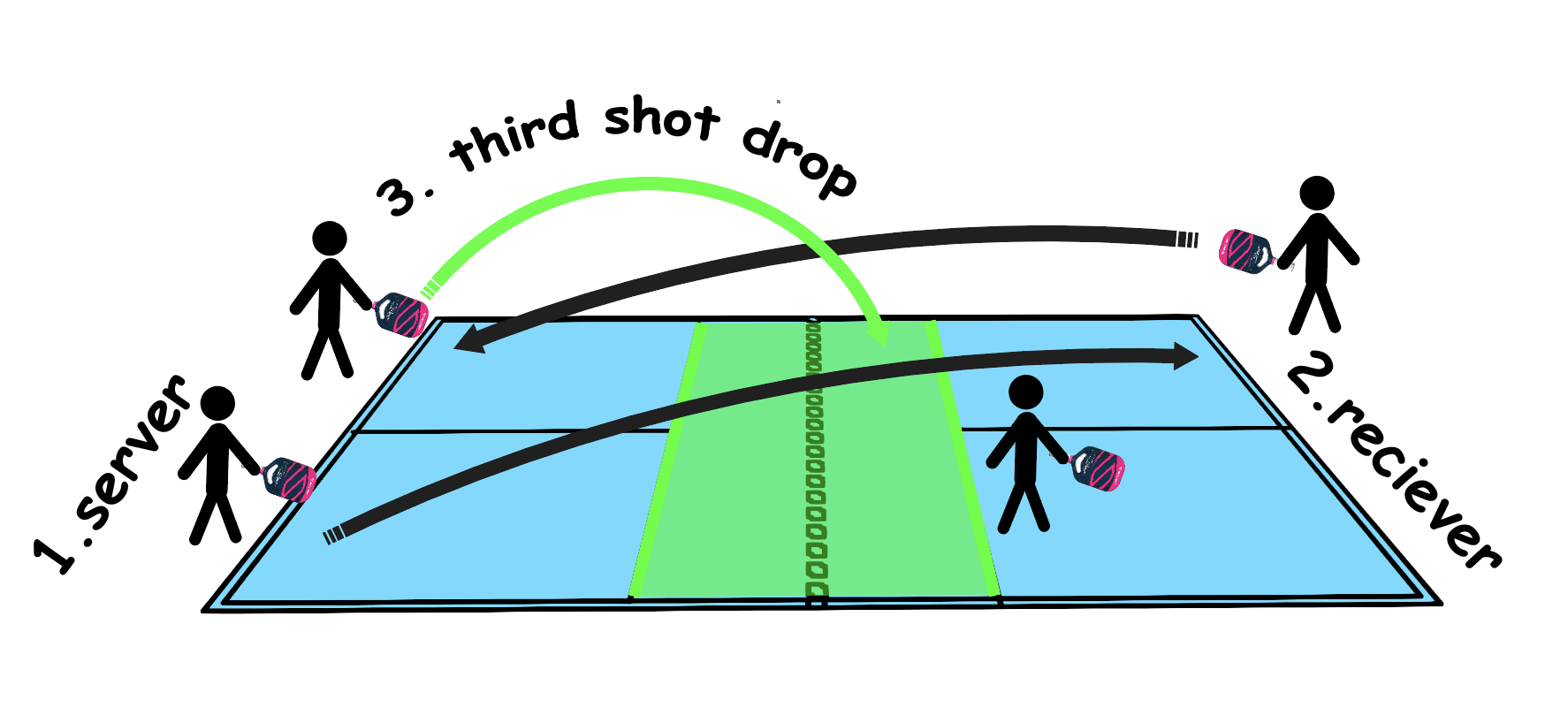
(Figure 5)
Positioning
Success in doubles is dependent on getting forward to the kitchen line with your partner. Playing deep in the court is a terrible strategy because it allows your opponents to move forward, take control of the net, and put away high shots more easily. Being in the right position on the court is key to winning at pickleball.
When serving, you and your partner need to stay deep in the court after the serve since the return of serve must also bounce before you hit it. Getting to the net (kitchen line) when you and your partner are back in the court often requires the drop shots I discussed briefly earlier. The benefits of this strategy are twofold - the softer shot gives your team more time to move forward, and the ball landing near your opponents' feet forces them to hit up on the ball. If they hit up on the ball and it gets too high, you are now in position to attack their shot from up in the court with an aggressive volley.
Shot Selection
When back in the court, drive or drop the ball at your opponents' feet. When both teams are at the kitchen line, dink balls that are at your knees or below.
Volley balls that are above your waist.
Wrapping Up
Now that you've got the rules, strategies, and techniques down, you're ready to step onto the court. Good luck and enjoy the fastest growing sport in America!
Frequently Asked Questions
What equipment do I need to start playing pickleball?
To start playing pickleball, you need a pickleball paddle (different from a tennis racket—solid faced with no strings), pickleballs (plastic balls with holes, similar to wifflballs), and access to a pickleball court with a net. Courts are 20x44 feet—about one-third the size of a tennis court. Comfortable athletic shoes with good lateral support are recommended. Check out our paddle buyer's guide to find the right paddle for beginners, typically priced $50-$100.
How do you score in pickleball?
Only the serving team can score points. Games are typically played to 11 points (win by 2). In doubles, you call out three numbers: your score, opponent's score, and server number (1 or 2). For example, "4-2-1" means your team has 4, opponents have 2, and you're the first server. After each point won, partners switch sides. When the serving team loses a rally, the serve passes to their partner (server 2). When server 2 loses, it's a "side-out" and the other team serves.
What is the "kitchen" and why is it important?
The kitchen (officially the "Non-Volley Zone") is the 7-foot area on both sides of the net marked by a line. You cannot hit a volley (ball out of the air) while standing in the kitchen or touching the kitchen line—this prevents players from smashing at the net. You can enter the kitchen to play a ball that has bounced. Stepping on the line while volleying is a fault even if you make contact outside the zone. The kitchen rule is what makes pickleball unique and emphasizes strategy over power.
What is the two-bounce rule?
After the serve, the ball must bounce once on each side before anyone can volley (hit out of the air). Specifically: (1) the receiving team must let the serve bounce before returning it, and (2) the serving team must let that return bounce before hitting it. After these two bounces, either team can volley or play off the bounce. This rule prevents serve-and-volley dominance and ensures longer rallies with more strategic play.
What's the difference between singles and doubles pickleball?
Doubles (most common) features two players per team, wider court usage (alleys are in-play), both partners get to serve during each possession, and emphasizes teamwork and court positioning. Singles is one-on-one, uses the same court dimensions but no alleys, only one server per side, and requires more court coverage and stamina. Singles scoring is simpler (two numbers: your score and opponent's score). Doubles is more social and forgiving for beginners, while singles is more athletic and tennis-like.

About Kyle Koszuta
Pickleball Portal Contributor
Kyle Koszuta is a contributor to Pickleball Portal, sharing insights and expertise to help players of all levels improve their game.