
Independent & Unbiased
Founded in 2017, Pickleball Portal is one of the original pickleball content sites — built before the sport went mainstream. Our reviews are written by 14 independent contributors who play competitively and test gear firsthand. We may earn a small commission through affiliate links, but this never influences our recommendations. You pay nothing extra.

Photo by Bruce Yeung; IG:@yeungphotography
Basic Pickleball Positioning
Let’s start with regular pickleball positioning: in our starting position, I’m on the right, and my partner is on the left. In this setup:
-
When our score is even (0, 2, 4, 6, 8, or 10), I’ll be on the right, and my partner will be on the left (Figure 1).
-
When the score is odd (1, 3, 5, 7, or 9), my partner will switch to the right side, and I’ll move to the left (Figure 2).
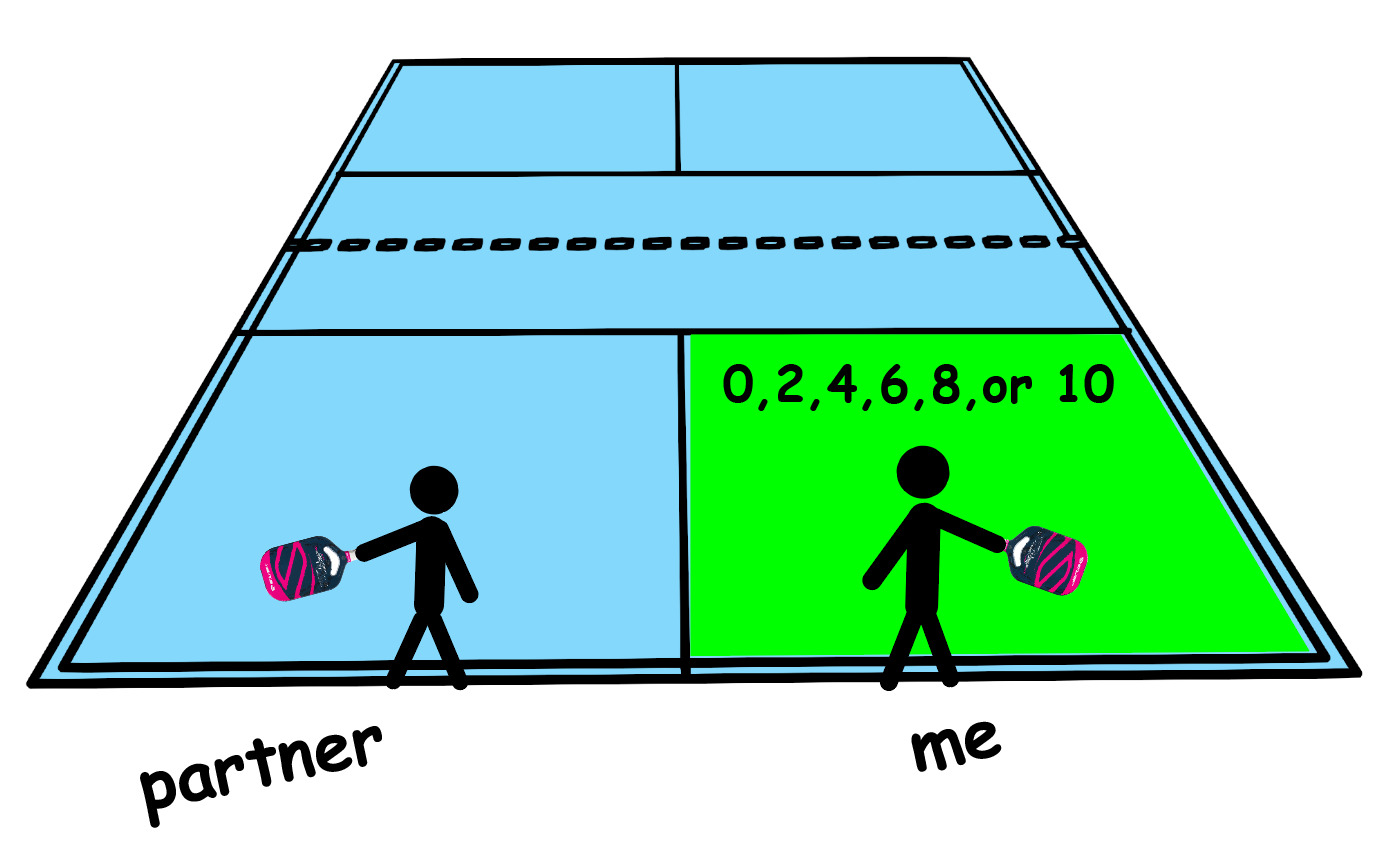
(Figure 1) ThatPickleballGuy
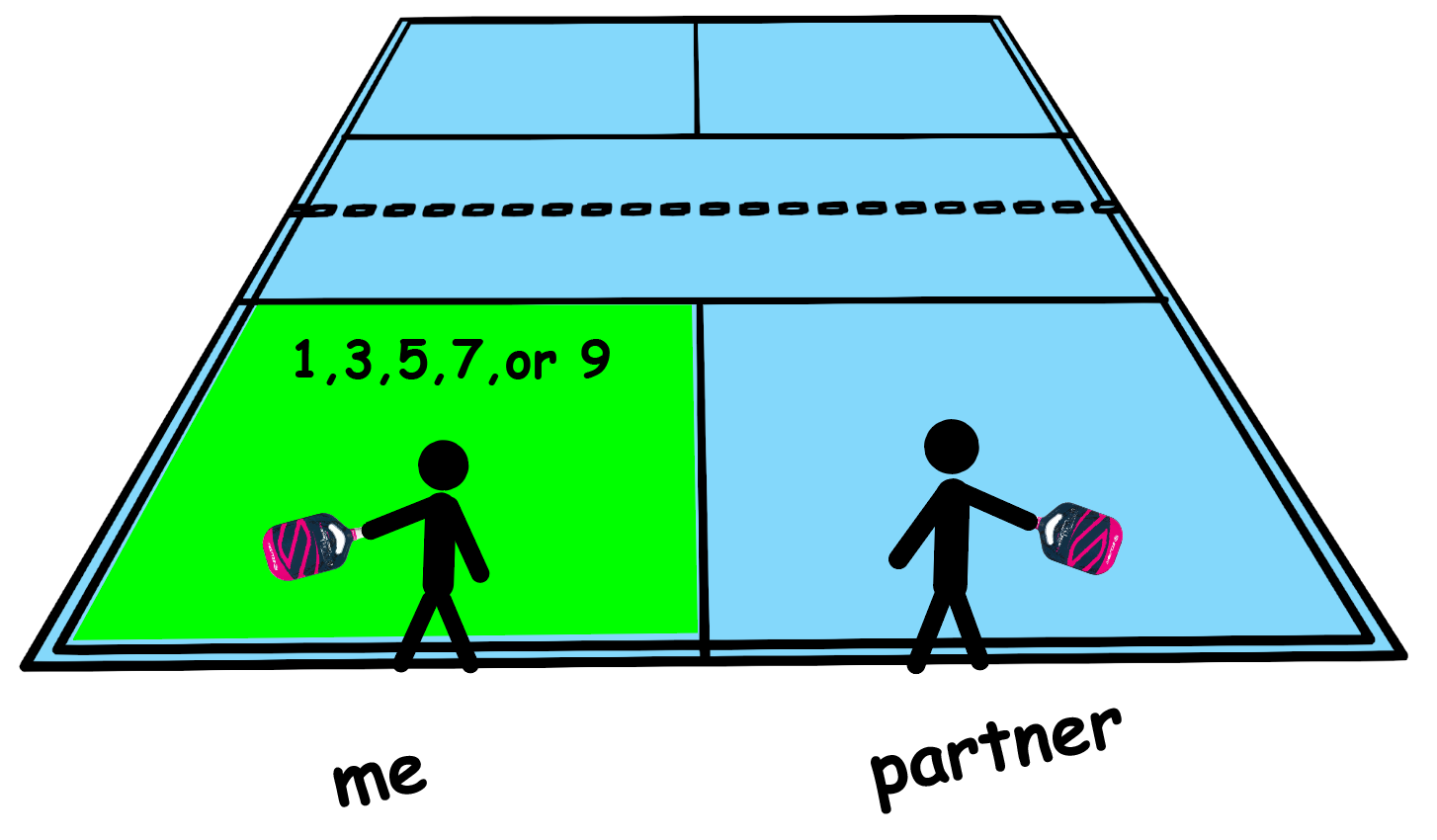
(Figure 2) ThatPickleballGuy
This foundational “starting position” is key throughout the game, and returning to it keeps our positioning consistent as scores change.
Normal Switching vs. Stacking
In a typical game, after winning a point, players switch sides. This is how most players approach the game, playing interchangeably on both sides. We’ll call this the “normal world.”

Introduction to Stacking
Now, let’s introduce stacking. Stacking is a doubles strategy that allows each player to stay on their preferred side or “stronger side” throughout the game. For example, if my partner prefers the left and I prefer the right, stacking keeps us in those spots.

How To Choose a Pickleball Paddle: The Complete Buyer's Guide (2026)
How Stacking Works
Stacking allows us to stand on the same side before the serve, which is completely legal (Figure 3). After each point, the server still switches sides, but once the serve begins, both players quickly move back to their preferred sides – my partner on the left, and me on the right (Figure 4). This lets us stay on our strongest sides throughout the game, maximizing our strengths.
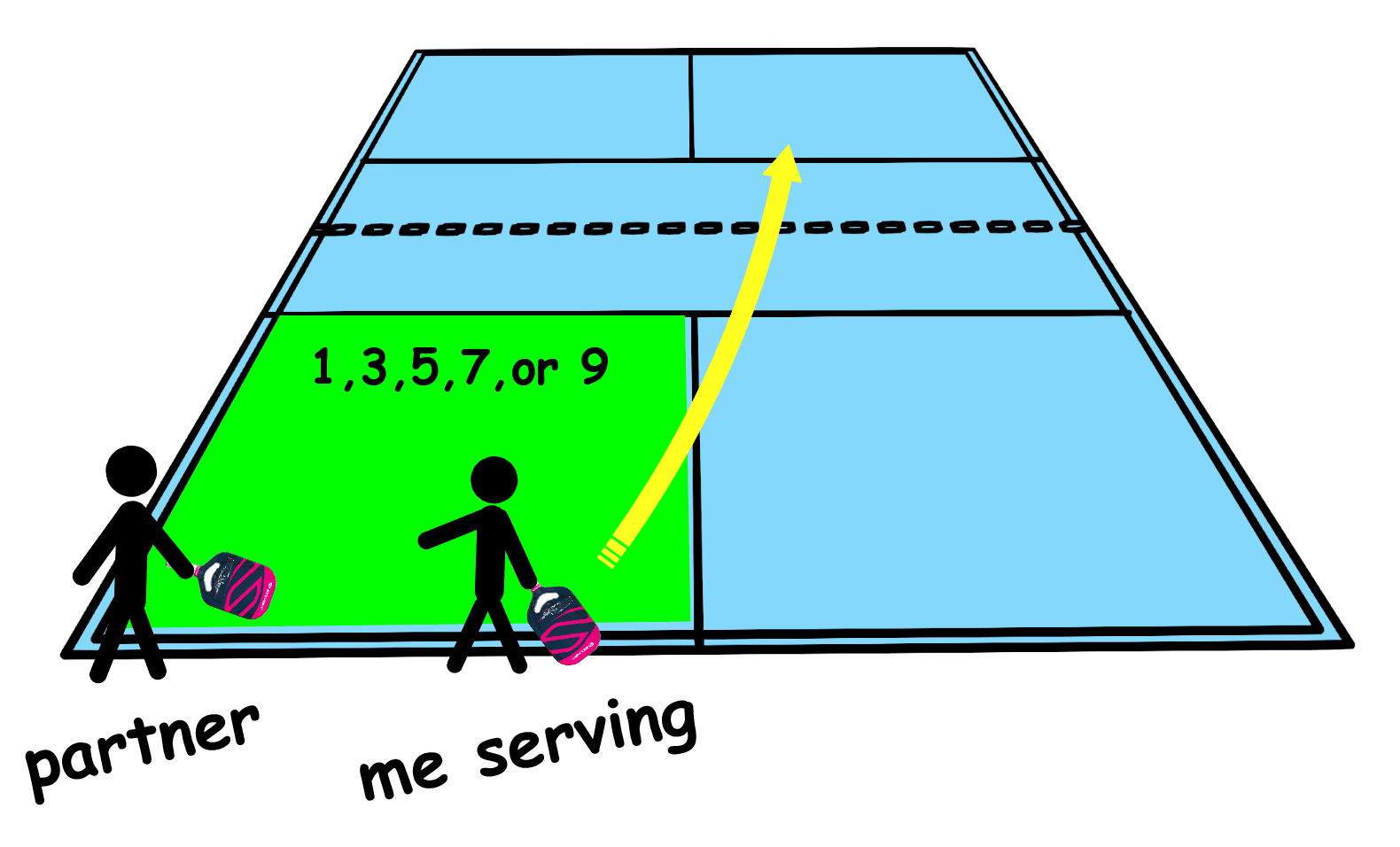
(Figure 3) ThatPickleballGuy
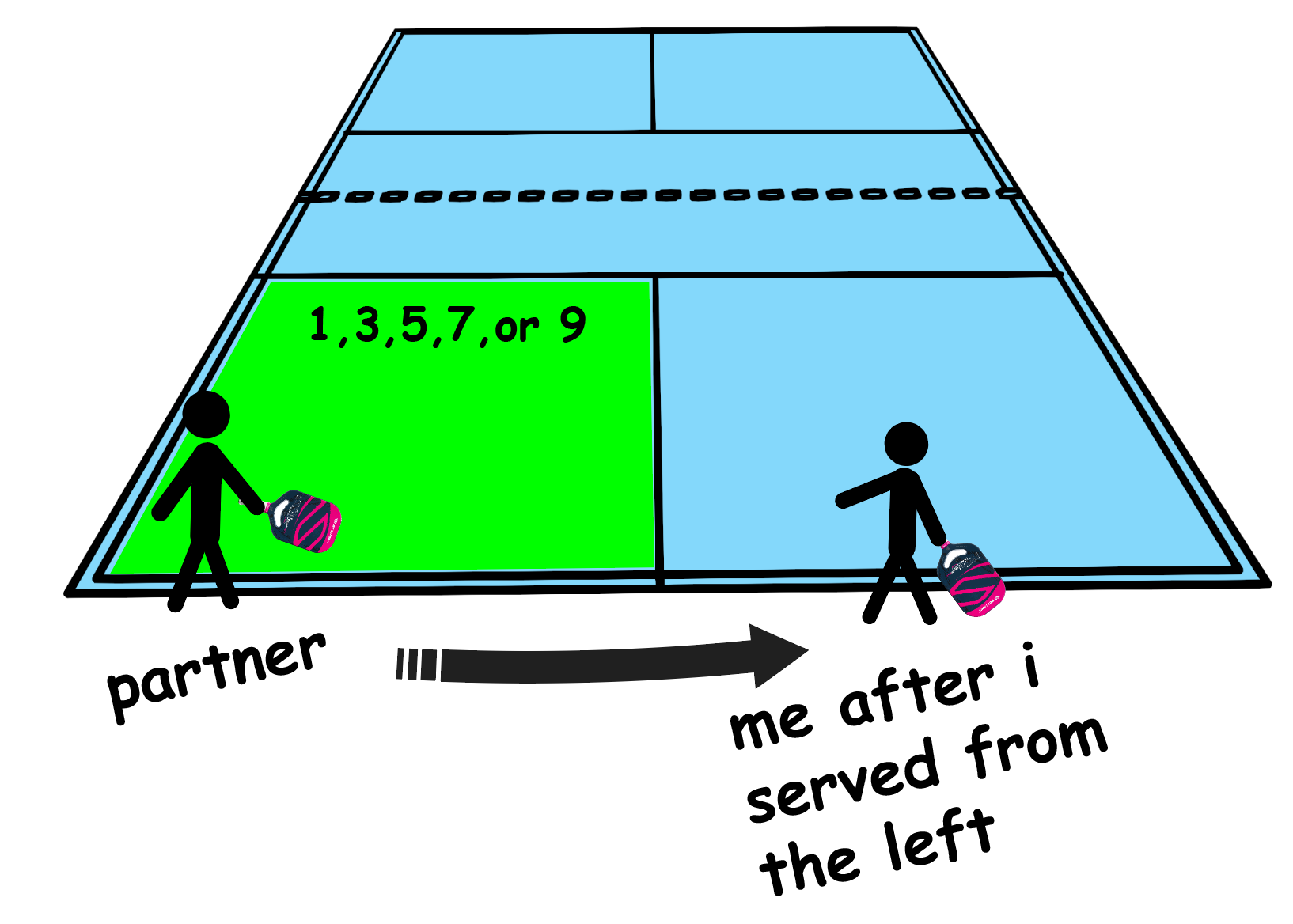
(Figure 4) ThatPickleballGuy
Benefits of Stacking
Here are six key reasons why you might consider stacking:
- More Length: A taller player often has better reach, making it advantageous for them to play on the left, where they can cover more of the middle.
- Stronger Forehand: In mixed doubles, the player with a stronger forehand (often the man) might play on the left for stronger put-away shots.
- Righty-Lefty Combination: Righty-lefty pairs can keep forehands in the middle, providing better coverage and offensive power.
- Hide Weaknesses: If one player has a weaker backhand, stacking allows them to stay on the right side where they can rely on their forehand.
- Highlight Strengths: Positioning a player with a powerful forehand or an aggressive Ernie player on their preferred side can boost team offense.
- Switch Things Up: If one side is being overpowered, switching can provide a fresh look, potentially throwing off the opposing team’s rhythm.

Stacking On The Return
One of the most confusing parts of stacking can be figuring out where to stand when your team is receiving the serve, especially after a side-out. A good rule to avoid confusion is to remember your “starting position.” If you began the game on the right side, you’ll stand on the right when the score is even (0, 2, 4, etc.). If the score is odd (1, 3, 5, etc.), you switch sides and stand on the left.
The After-Return Switch
After returning the ball, you may choose to use an after-return switch. Here’s how it works:
- Before play starts, the player at the net signals to the returning partner whether to stay or switch. A fist means “stay,” and an open hand means “switch” (Figure 5).
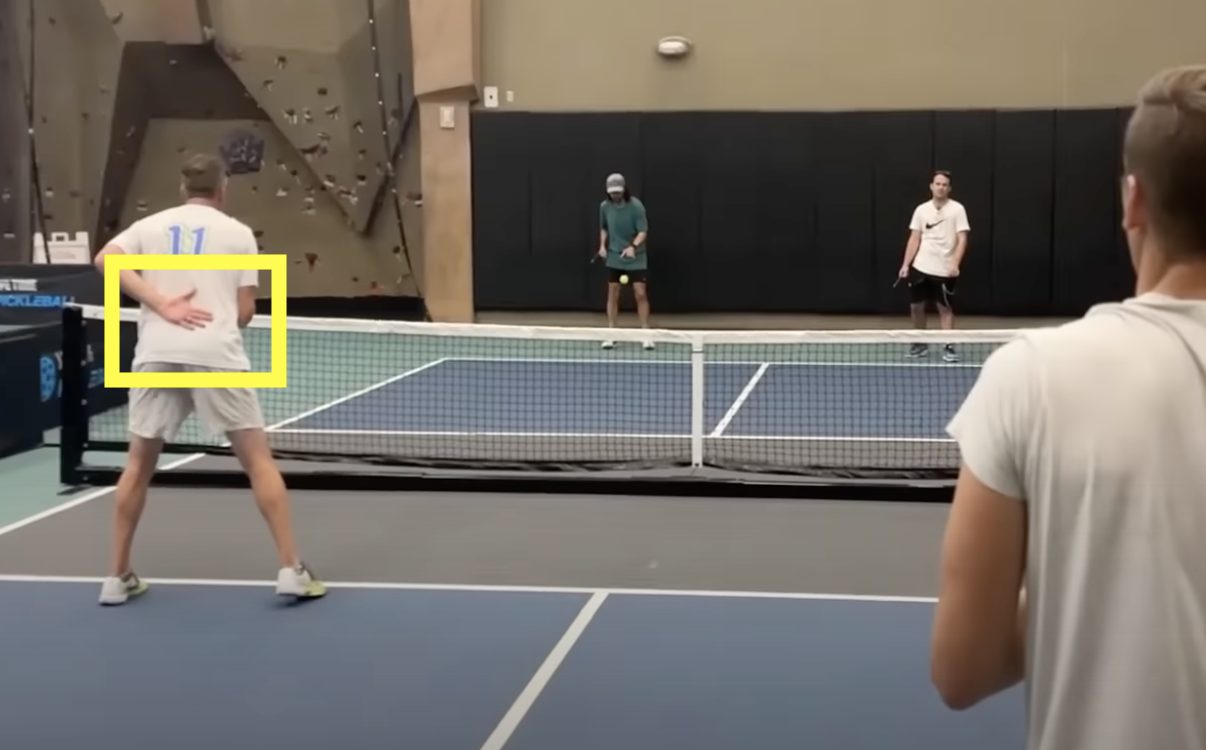
(Figure 5) ThatPickleballGuy
- Once the serve is returned, the returning partner crosses over to get to their preferred side, and the player at the net who gave the “switch” signal would move to the right (Figure 6).
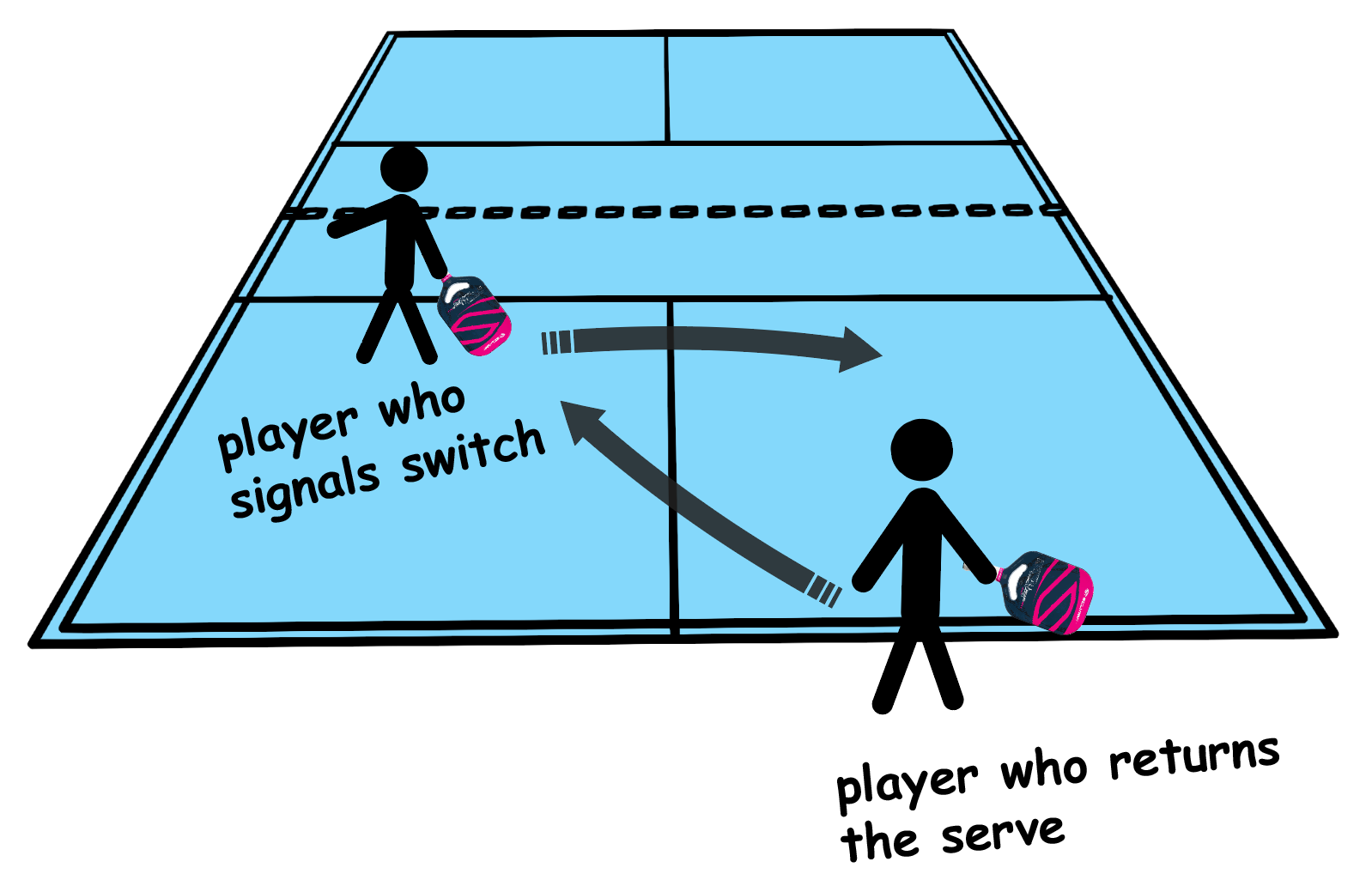
(Figure 6) ThatPickleballGuy
This switch allows the returning player to cover the middle momentarily as their partner moves to their side of the court, reducing any gaps in coverage.
Another Method: The Step-On Approach
To avoid any loss of visual contact with the ball, you can also try the step-on approach. In this method:
- The player waiting at the net stays off the court to the right.
- After the return, the partner quickly steps onto their preferred side without needing to cross in front of each other (Figure 7).
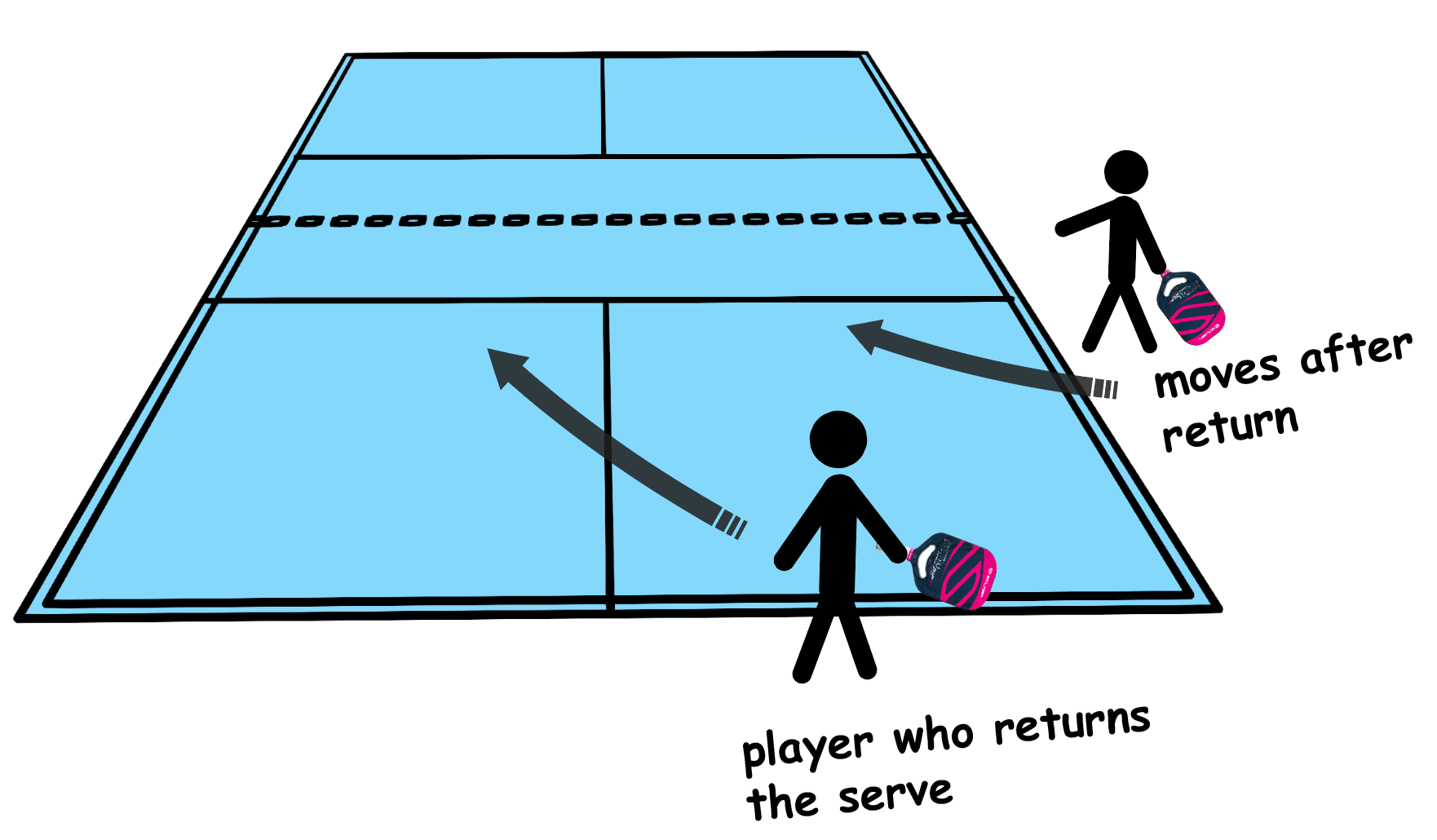
(Figure 7) ThatPickleballGuy
This keeps both players in position and ensures they never lose sight of the ball. However, it requires a strong, deep return to give the player at the baseline enough time to switch safely.
These techniques allow your team to stay on your preferred sides without missing a beat, keeping your strongest positioning intact while receiving the serve.
Wrapping Up
Stacking is a powerful strategy that allows you and your partner to play to your strengths, covering more court space effectively and maintaining better positioning throughout the game. If you have any questions or insights, let me know in the comments below!
Think you know pickleball inside and out? Challenge yourself with ThatPickleball IQ Test and see if you can score a perfect 10 out of 10!
See you guys next time 👊🏻
Related Articles

About Kyle Koszuta
Pickleball Portal Contributor
Kyle Koszuta is a contributor to Pickleball Portal, sharing insights and expertise to help players of all levels improve their game.